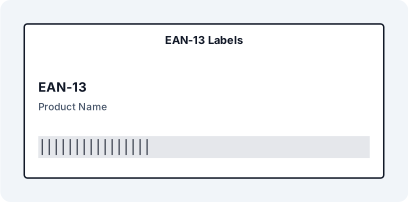
The Better Way to Print EAN-13 Labels Template for Excel
EAN-13 Labels Template for Excel gives teams a practical starting point for barcode and QR workflows where the encoded value must match the source system exactly. The workbook is intentionally structured around EAN-13, Product Name, Brand, Price, so import mapping stays visible, audit-friendly, and easy to update before a production print run.
Instant Setup
Don't waste time formatting Word tables. This template is pre-configured with the correct margins and barcode fields.
Batch Processing
Link your Excel data and print 1 or 10,000 labels with one click. Every label is uniquely populated from your spreadsheet.
Vector Quality
Output high-resolution PDF or direct-to-printer data. Barcodes remain 100% sharp for perfect scanner reliability.
How to Use this EAN-13 Labels Template for Excel Guide
- Open the XLSX sample and confirm the headers: EAN-13, Product Name, Brand, Price.
- Paste or import production rows with one physical label per row.
- Format IDs, codes, dates, and scan values before importing, especially Barcode.
- Open the matching LabelFlow Pro JSON layout and verify each mapped field.
- Preview the longest real values, then print a short test batch on the final stock.
Suggested Excel Columns
- EAN-13 - barcode source value; format as Text in Excel
- Product Name - mapped field used by the template layout and workbook
- Brand - mapped field used by the template layout and workbook
- Price - price text shown on the label
Keep these fields aligned with the template workbook and the mapped fields in the LabelFlow Pro layout. Clean structure keeps imports predictable and reduces manual cleanup before printing.
Clean the spreadsheet
Format scan values as Text in Excel, including UPC, EAN, Code128, QR, SKU, serial, and tracking fields. Keep EAN-13, Product Name, Brand as separate columns so sorting, filtering, and reprints remain simple.
Protect mapped fields
The layout is already mapped to the workbook headers. If a column name changes, update the matching text, barcode, or QR element before importing new rows.
Check operational readability
Leave enough quiet zone around codes and keep human-readable text close enough for exception handling. Review EAN-13 with the longest realistic value and adjust font size, wrapping, or element width before the final batch.
Approve the print run
Print on the actual label stock and printer. Confirm margins, scaling, adhesive stock, and decoded value, quiet zone, contrast, and scanner reliability before releasing the batch.
Common Mistakes
- Letting spreadsheet formatting remove leading zeros or alter long identifiers.
- Encoding the wrong field because display text and database values were not separated.
- Shrinking QR or barcode elements below reliable scan size.
- Allowing Excel to drop leading zeros from UPC, EAN, SKU, or serial values.
- Reducing barcode height until scanners fail at normal working distance.
When This Template Is Useful
- Replacement barcode labels for internal systems
- QR labels that link to asset pages, product pages, or lookup records
- Asset and equipment tracking
- Serial, batch, lot, and item ID labels
Protecting the source value in Excel keeps the printed scan result aligned with the database.
Which fields are included?
The XLSX file, JSON template, and page field list all use: EAN-13, Product Name, Brand, Price.
Can I customize it for my workflow?
Yes. Add the column in Excel, then add or update the matching text, barcode, or QR element in the layout using the same header name.
What should I verify before printing?
Scan several printed samples with the real scanner or phone workflow, then compare the decoded value against the Excel source.